Deadlines approach, priorities shift, and everyone expects results yesterday. For project managers in fast-paced tech startups, keeping every detail organized and every contributor aligned can feel impossible. That is where organized process of planning, organizing, and managing tasks comes into play, transforming scattered efforts into clear progress. This guide unpacks task management fundamentals and explores practical systems to help you deliver results with less stress and stronger teamwork.
Table of Contents
- Defining Task Management And Key Concepts
- Types Of Task Management Systems For Startups
- Core Features And Workflow Integration Explained
- Role-Based Collaboration And Team Accountability
- Risks Of Poor Task Management And Mistakes To Avoid
Defining Task Management and Key Concepts
Task management is more than just keeping a to-do list. It’s the organized process of planning, organizing, and managing tasks to reach specific goals. When done right, it transforms chaos into clarity.
At its core, task management involves several connected activities:
- Identifying what needs to be done and why
- Assigning tasks to team members based on skills and availability
- Setting realistic deadlines and priorities
- Tracking progress as work moves forward
- Adjusting plans when circumstances change
Think of it like building a house. You don’t just start laying bricks randomly. You plan the foundation, assign workers to specific jobs, check progress daily, and adapt if you discover issues. That’s task management.
Why Task Management Matters for Your Startup
Task management systems help teams organize, prioritize, and manage work efficiently. They’ve evolved far beyond basic sticky notes into sophisticated digital platforms with real-time tracking and collaboration features.
Here’s what effective task management delivers:
- Increased productivity across your team
- Better deadline achievement and accountability
- Reduced stress and clearer priorities
- Stronger teamwork and communication
- Faster identification of roadblocks
For tech startups especially, this matters. You’re competing against larger companies with bigger budgets. What you have is speed and agility. Task management keeps that advantage sharp.
Key Concepts You Need to Know
Task identification means knowing exactly what work needs completion. In startups, priorities shift constantly. You need a system that captures these changes without creating confusion.
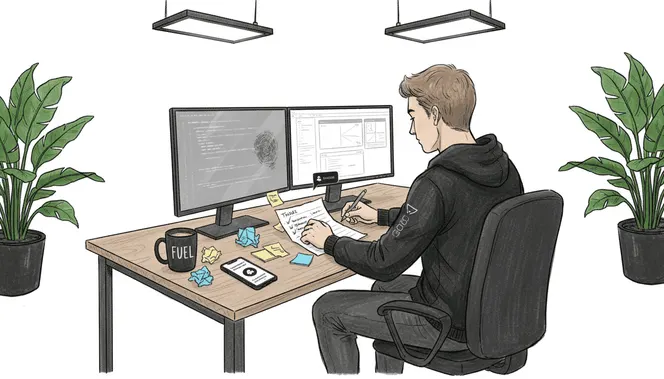
Task assignment ensures the right person handles each job. A designer shouldn’t manage database migrations, and a backend developer shouldn’t handle customer communications. Match tasks to expertise.
Prioritization separates urgent work from important work. Not everything deserves your team’s top attention right now. Some tasks can wait; others cannot. This distinction saves weeks of wasted effort.
Progress tracking keeps everyone honest. You can’t manage what you don’t measure. Real-time visibility into who’s doing what prevents bottlenecks and surprises.
Collaboration features break down silos between departments. When your designer, developer, and product manager work in separate systems, miscommunication becomes inevitable. Centralized task management keeps everyone aligned.
Effective task management bridges the gap between strategy and execution, turning ambitious goals into completed work.
Pro tip: Start by mapping your current workflow for one project. Write down every task, who does it, how long it takes, and where handoffs happen. This baseline reveals exactly where your team loses time and clarity.
Types of Task Management Systems for Startups
Not all task management systems work the same way. Different approaches suit different team sizes, workflows, and project types. Understanding your options helps you pick the right fit for your startup.
Board-Based Systems
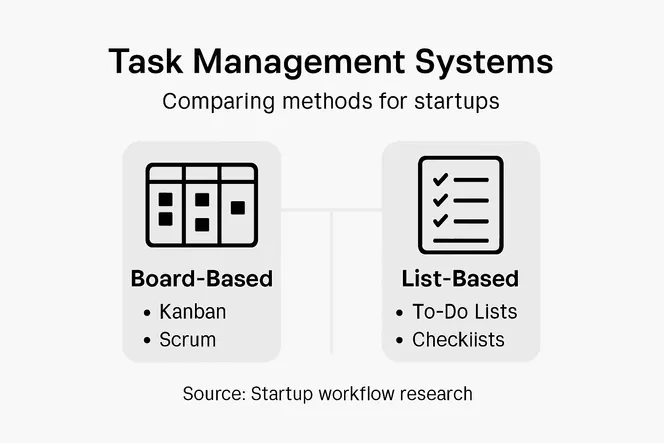
Kanban boards visualize work in columns representing stages: To Do, In Progress, Done. Each task becomes a card that moves across the board. This approach works beautifully for teams that need constant visibility into workflow status.
Kanban keeps bottlenecks visible instantly. When the “In Progress” column fills up, everyone sees the problem. This transparency drives faster problem-solving.
List-Based Systems
List-based task managers organize work as hierarchical to-do lists. Tasks nest under projects, which nest under goals. This structure suits teams managing multiple projects simultaneously with clear hierarchies.
Lists excel when you need detailed breakdowns. A single project can have dozens of subtasks, each with its own deadline, assignee, and dependencies.
AI-Powered Automation Systems
Modern platforms now use AI suggestions and automation to handle repetitive work. The system learns your patterns and can auto-assign tasks, suggest deadlines, or flag risks before they become problems.
This approach frees your team from administrative overhead. Instead of manually updating statuses, the system tracks progress automatically and alerts you to delays.
Here’s a concise overview of the main types of task management systems for startups:
| System Type | Best For | Unique Advantage |
|---|---|---|
| Board-Based (Kanban) | Visual progress tracking | Instantly highlights bottlenecks |
| List-Based | Managing complex projects | Handles detailed breakdowns |
| AI-Powered | Reducing admin overhead | Suggests assignments automatically |
Comparing Popular Options
Top task management software for startups includes platforms offering different strengths:
- Visual-first tools excel at project overview and team coordination
- Feature-rich platforms provide automation, CRM integration, and advanced reporting
- Lightweight solutions prioritize simplicity and quick onboarding
- Collaborative platforms emphasize real-time teamwork and communication
Your choice depends on three factors:
- Team size and structure
- Project complexity and number
- Budget and integration needs
What Matters Most for Startups
Startups can’t afford bloated systems requiring weeks of setup. You need something your team adopts immediately, not something that sits unused while people email spreadsheets to each other.
Look for platforms offering task assignment, real-time tracking, and basic automation. These core features drive 80 percent of productivity gains for most startup teams.
The best task management system is the one your team actually uses consistently.
Pro tip: Test any system with a single high-priority project before committing your entire team. A two-week trial reveals whether the workflow matches how your team actually works, not how you hope they’ll work.
Core Features and Workflow Integration Explained
The right task management system does more than store your to-do list. It connects everything your team uses daily, eliminating the friction that slows progress. Let’s break down the essential features that make this possible.
Task Creation and Assignment
Creating tasks should take seconds, not minutes. A good system lets you write a task title, add a description, set a deadline, and assign it to someone instantly. No unnecessary steps or confusing menus.
Assignment clarity prevents confusion about who owns what. When a task sits unassigned, it falls through the cracks. When multiple people own it, nobody owns it. The system should make ownership unmistakable.
Visual Progress Tracking
Modern task management systems use visual tools like Gantt charts and Kanban boards to display progress. These visual formats replace status meeting emails where everyone reports what they did.
Visual tracking shows at a glance:
- What’s completed and what remains
- Which tasks are blocked or delayed
- How work distributes across the team
- Whether projects stay on schedule
A Gantt chart displays timeline dependencies. A Kanban board shows workflow stages. Pick whichever matches how your team thinks about work.
Prioritization and Dependencies
Prioritization features help teams focus on what matters most. Without this, urgent work gets buried under routine tasks. Your system should let you flag critical work and sort by priority instantly.
Task dependencies show which work must happen first. You can’t deploy code before writing it. The system should block dependent tasks until predecessors complete, preventing wasted effort.
Real-Time Collaboration and Integration
Your team uses email, calendar, chat, and other tools daily. Task management shouldn’t exist in isolation. The best systems connect with these tools through integrated collaboration features and seamless software integration.
Integration benefits include:
- Calendar events sync with task deadlines
- Email comments update task status
- Notifications reach people in Slack or Teams
- Automated workflows trigger actions across platforms
When tools talk to each other, context stays shared. Nobody asks “Where are we on this?” because everyone sees the same updated status.
Integration isn’t a luxury feature—it’s what separates tools your team uses from tools they ignore.
Pro tip: Before selecting a system, audit your current workflow. List every tool your team touches daily: email, calendar, chat, design software, code repositories. Prioritize systems that integrate with at least your top three tools rather than those requiring workarounds.
Below is a helpful summary of the core features every effective task management system should have:
| Feature | Description | Benefit for Startups |
|---|---|---|
| Task Assignment | Assigns clear ownership | Prevents confusion and delays |
| Progress Visualization | Shows real-time status and workload | Enables quick decision-making |
| Prioritization | Flags critical work | Maximizes team productivity |
| Tool Integration | Connects with email and calendar | Eliminates redundant updates |
Role-Based Collaboration and Team Accountability
Team accountability isn’t about blame. It’s about clarity—knowing who does what and why they own it. When roles blur, work falls through cracks. When roles are clear, your team moves with purpose.
Defining Roles and Responsibilities
Clear role definitions form the foundation of team accountability. Each person should know exactly what they own, what success looks like, and who depends on their work. Vagueness breeds conflict and missed deadlines.
Start by mapping roles explicitly:
- Who approves decisions in each area?
- Who executes the actual work?
- Who provides feedback or quality checks?
- Who escalates problems when they arise?
Without this clarity, people either duplicate effort or avoid responsibility entirely.
Multilevel Accountability Framework
Accountability in teams is multilevel, operating at individual, team, and organizational levels. Your task management system should reflect this structure, making accountability visible at each level.
Individual accountability means each person owns their tasks and delivers on time. Team accountability means the group collectively hits deadlines and supports each other. Organizational accountability means your startup delivers on promises to customers and investors.
All three matter. Neglect any one, and the system breaks down.
How Collaboration Shapes Accountability
Effective collaboration requires clarity in role and task definitions with team members actively taking or accepting accountability. This happens through both formal structures (task assignments, role titles) and informal interactions (daily standups, peer feedback).
When your designer reviews the developer’s work, both are demonstrating accountability. When a product manager flags conflicting priorities, they’re maintaining team integrity. These interactions build trust and commitment.
Using Task Systems to Enforce Accountability
A good task management system makes accountability automatic, not optional:
- Task ownership is explicit—no ambiguity about who’s responsible
- Due dates create urgency and tracking points
- Progress visibility shows whether work stays on schedule
- Comments and updates create an audit trail of decisions
- Status reports emerge automatically from task data
This eliminates endless status meetings. People can see real-time progress themselves.
Building Trust Through Transparency
Transparency doesn’t mean micromanagement. It means everyone trusts they can check progress without asking for updates. Your developer doesn’t email the project manager asking “Where are we?” They check the system.
This transparency builds the psychological safety required for high-performing teams. People know they won’t be blindsided. Problems surface early.
Accountability without trust becomes blame culture. Trust without accountability becomes chaos. Your task system should enable both.
Pro tip: During your next team meeting, review the past week’s completed tasks together. Celebrate wins, identify blockers, and discuss what helped or hindered progress. This ritual turns task data into team learning, strengthening both accountability and trust.
Risks of Poor Task Management and Mistakes to Avoid
Poor task management doesn’t just slow your team down. It creates stress, breeds missed deadlines, and erodes trust. Understanding the common pitfalls helps you avoid them before they damage your startup.
The Procrastination Trap
Poor time management and procrastination reduce productivity while increasing stress and underperformance. In startups, procrastination compounds quickly. One delayed decision blocks three other tasks. A delayed launch pushes back customer revenue.
Procrastination typically stems from unclear priorities or overwhelming workload. When everything feels urgent, nothing feels actionable. Your team freezes instead of moving forward.
Overloading Without Prioritization
Assigning too many tasks simultaneously guarantees failure. Your team becomes context-switching machines, jumping between incomplete work. Context switching costs 40 percent of productive time according to industry research.
Without clear prioritization, people work on what feels easiest rather than what matters most. A designer polishes interface details while critical functionality remains unbuilt.
Set explicit priorities:
- Define the top three priorities per week
- Make deadlines realistic based on team capacity
- Allow buffer time for unexpected issues
- Say no to nice-to-have requests
Ignoring Dependencies and Blockers
Task dependencies aren’t optional considerations. They’re hard constraints. Your backend developer can’t deploy until the database migration completes. Your QA team can’t test until the feature builds successfully.
When tasks block each other without visibility, work stalls. People sit waiting while others don’t realize the dependency exists.
Losing Visibility Into Progress
If you can’t answer “What percentage complete is project X?” in 30 seconds, your visibility is broken. Hidden problems stay hidden until they explode.
Common visibility failures include:
- Tasks created but never marked complete
- Abandoned projects lingering as active
- Status updates that never happen
- Blockers nobody knows about until deadlines pass
Real-time visibility prevents surprises. It surfaces problems early when fixes are still cheap.
Insufficient Communication and Handoffs
Tasks live in a tool. People live in email, Slack, and meetings. When these don’t connect, information scatters. Your designer finishes work, but the developer doesn’t know it’s ready. Requirements shift, but the project manager doesn’t update the task list.
Handoffs fail when the receiving person doesn’t know they own the work next. The sender assumes completion; the receiver assumes someone else handles it.
Poor task management is invisible until it’s catastrophic. Prevention requires discipline, not intelligence.
Pro tip: Establish a daily 10-minute standup where each person states what they completed yesterday, what they’re working on today, and what’s blocking them. This ritual catches problems early and keeps priorities aligned without status meetings.
Boost Your Startup’s Productivity with AI-Powered Task Management
The article highlights critical challenges such as unclear task ownership, poor prioritization, and lack of visibility that hold tech startups back from peak productivity. If you are struggling to keep your team’s workflow organized and seamless or overwhelmed by managing multiple projects and dependencies, you are not alone. Concepts like task assignment clarity, real-time progress tracking, and integrated collaboration are essential for transforming startup chaos into smooth, accountable execution.
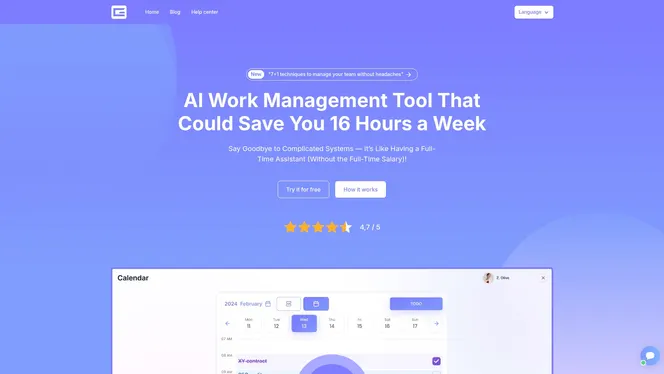
Discover how Gammatica can solve these pain points with its AI-driven project and team management platform tailored for startups. With powerful features like Kanban boards for visual workflow, AI suggestions to reduce administrative overhead, and seamless integration with tools you already use, Gammatica helps your team save time, align priorities, and boost accountability. Act now and start streamlining your operations today. Visit the Gammatica landing page to unlock up to 16 extra hours weekly and experience task management designed for fast-moving startups.
Frequently Asked Questions
What is task management in tech startups?
Task management is the organized process of planning, organizing, and managing tasks to achieve specific goals, essential for transforming chaos into clarity in a tech startup environment.
Why is effective task management important for startups?
Effective task management helps increase productivity, improve deadline achievement, reduce stress, enhance teamwork, and facilitate faster identification of roadblocks, all critical for competing in the fast-paced tech landscape.
What are some common types of task management systems?
Common types of task management systems include board-based systems like Kanban, list-based systems for hierarchical task management, and AI-powered automation systems that help reduce administrative overhead.
How can task management systems improve team accountability?
Task management systems enhance team accountability by clearly defining roles and responsibilities, tracking task ownership and progress, and facilitating open communication among team members, resulting in a more focused and reliable team dynamic.